The painting and drying processes in electronics factories are the primary sources of exhaust emissions. Samples are collected at multiple points, including the outlet of the painting workshop’s exhaust pipe, the inlet and outlet of the VOCs treatment system, the coating plant installation area, the paint booth, the factory's upper boundary, and the downwind perimeter. The identified pollutants include toluene, xylene, butyl acetate, methyl isobutyl ketone, isopropanol, cyclohexane, and related compounds.
By analyzing the types of VOCs emitted during different stages of the coating process for various products, it has been observed that the coating phase generates a large number of VOCs—sometimes 8 to 10 types—among which aromatic hydrocarbons account for the majority. The specific types of VOCs vary by production stage and process.
Due to the diversity of production processes in the electronics industry, the composition of exhaust pollutants is complex and requires tailored treatment solutions. You are welcome to contact us directly, and BONRXIN will arrange for professional technicians to conduct an on-site assessment.
Waste Gas Treatment Plans
The treatment of waste gas in electronics factories targets the purification of organic emissions generated from processes such as electroplating, etching, oxidation, immersion gold, immersion tin, tin spraying, and solder paste application.
Common purification methods for organic waste gases include:
a. Activated carbon adsorption
b. Catalytic combustion
c. Spray absorption tower
d. Photocatalytic oxidation
e. Low-temperature plasma purification
No single purification technology is sufficient on its own due to inherent technical limitations. Therefore, integrated treatment solutions combining multiple technologies are commonly used. Except for catalytic combustion, most of the other methods are widely applied. Based on the results of on-site evaluations, we will provide customized integrated treatment plans.
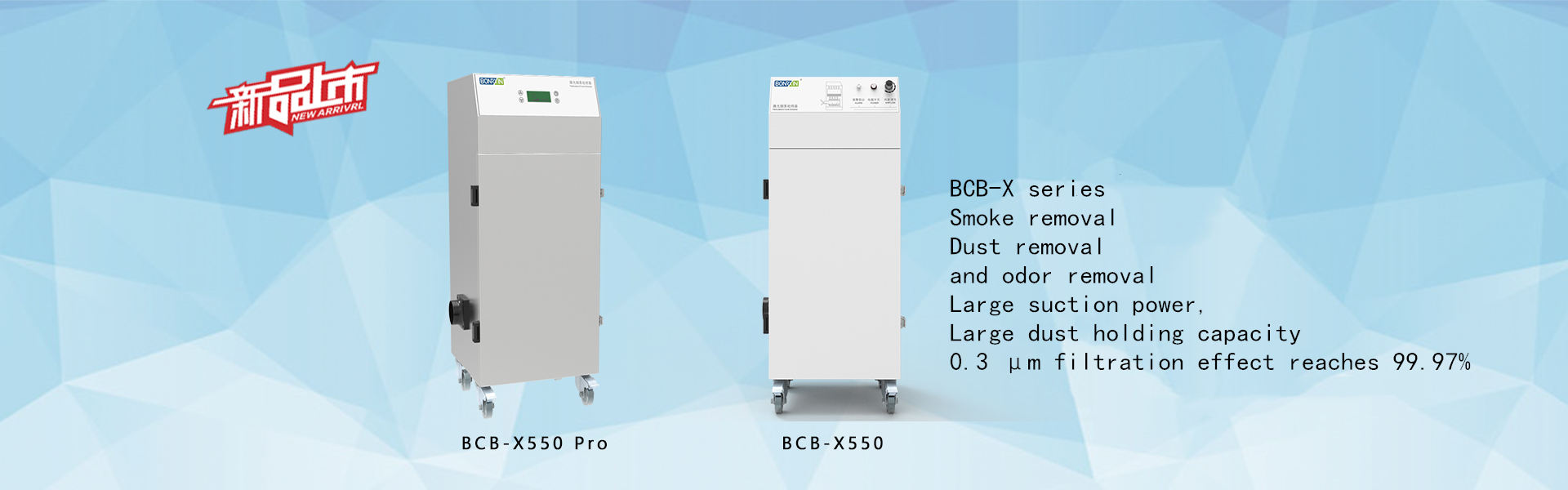
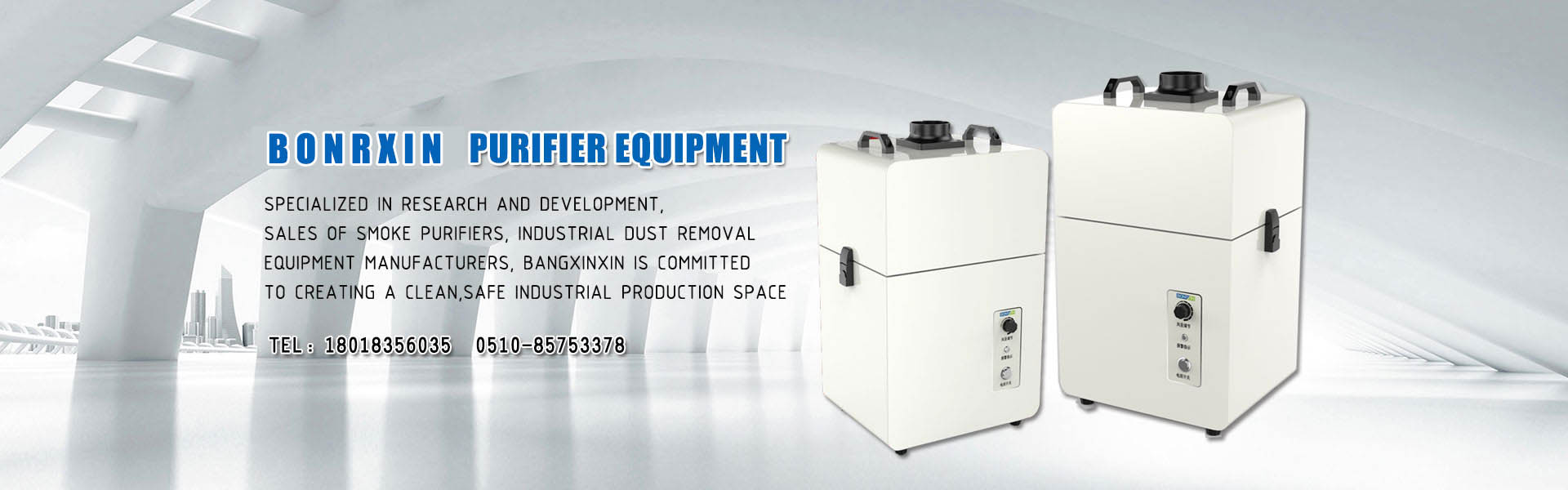
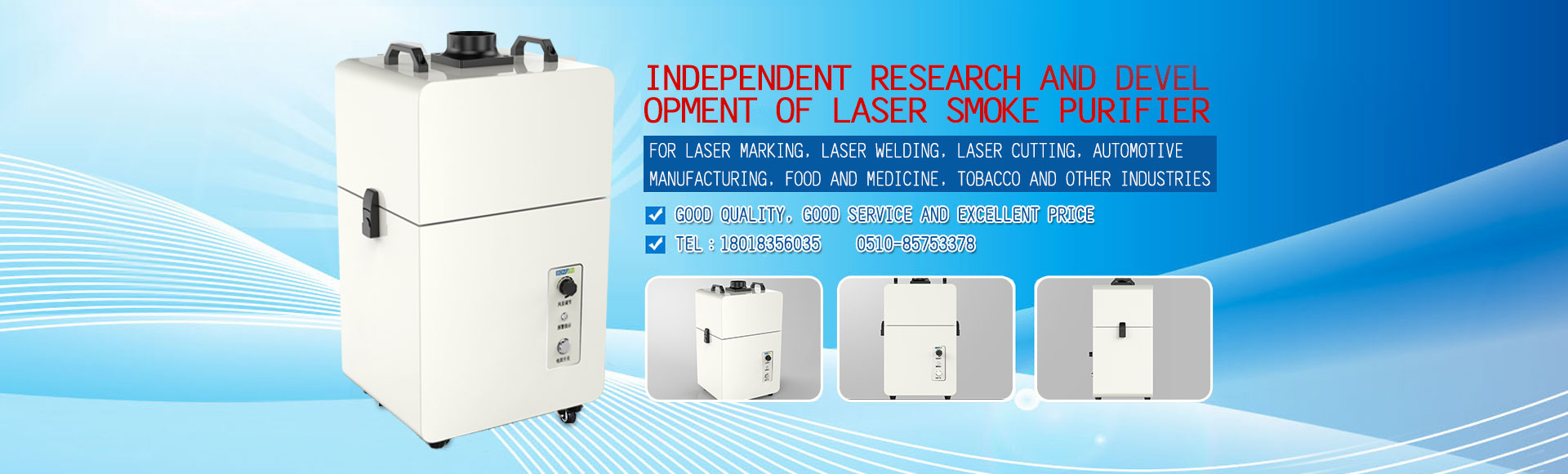
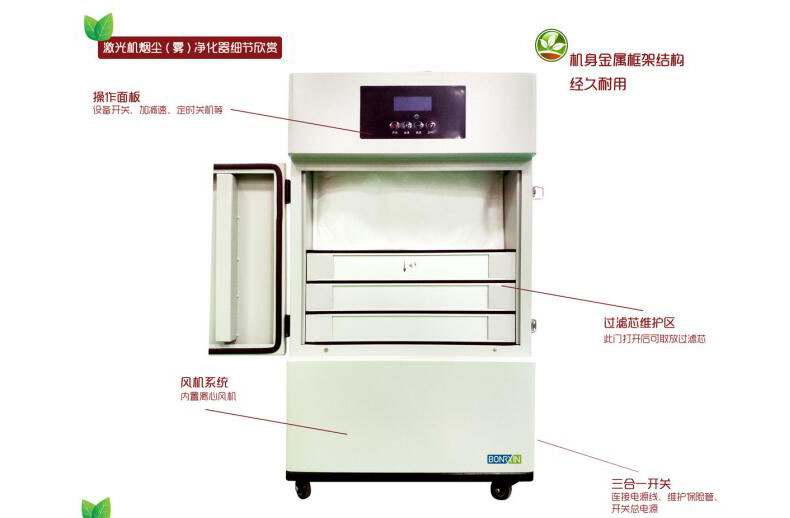
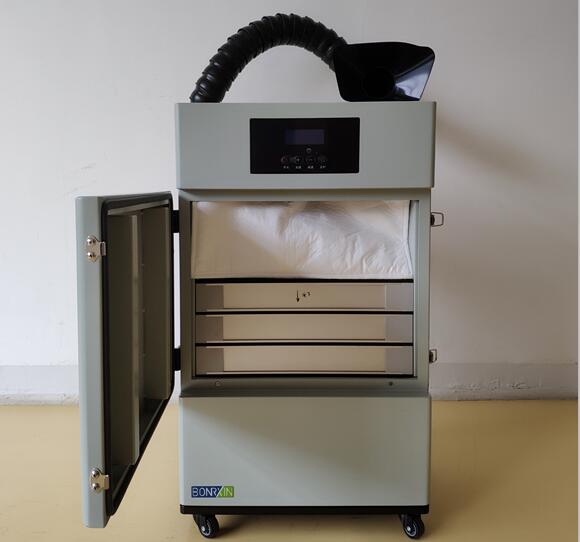
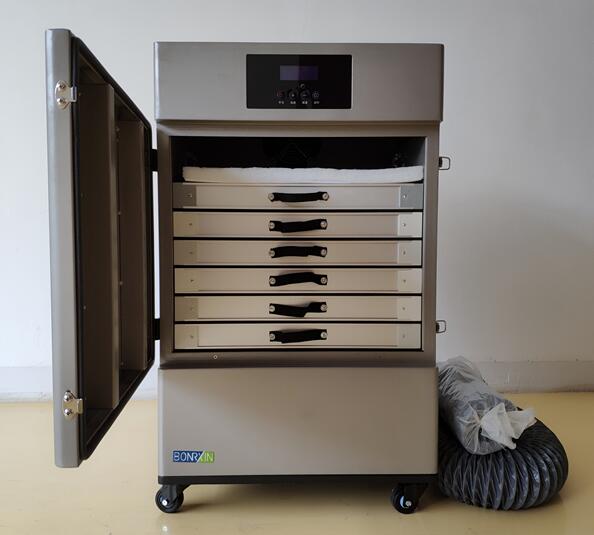
Smoke Purifier – Model BCB-350W-YF
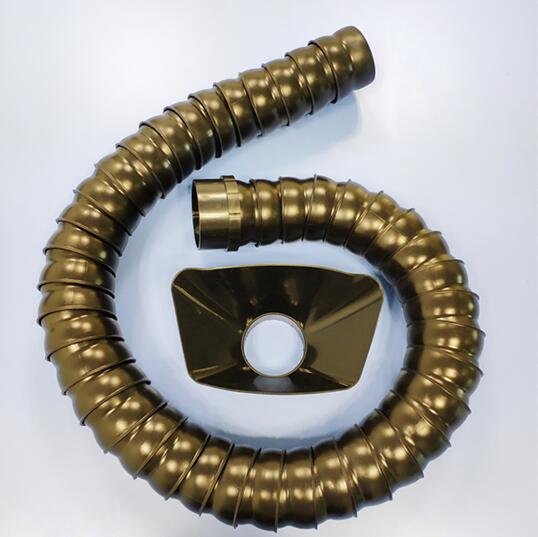
This product is designed for the purification of dust, odors, and toxic gases generated during laser marking, engraving, cutting, grinding, and similar processes. It offers excellent performance in both dust filtration and odor control. The multi-layer filtration unit includes a 5-micron filter bag, a 0.3-micron polypropylene filter cartridge, and an activated carbon filter. It effectively captures dust particles down to 0.3 microns, achieving a filtration efficiency of up to 99.70%. The activated carbon layer adsorbs toxic gases such as benzene, ketones, alcohols, alkanes, and mixed organic vapors. The purified air can be safely discharged indoors. The unit supports flexible filter combinations depending on the environment: for heavy dust conditions, the filter bag and PP core can be used together; for high-odor environments, a combination of four layers of activated carbon with a filter bag is recommended.
Product Features
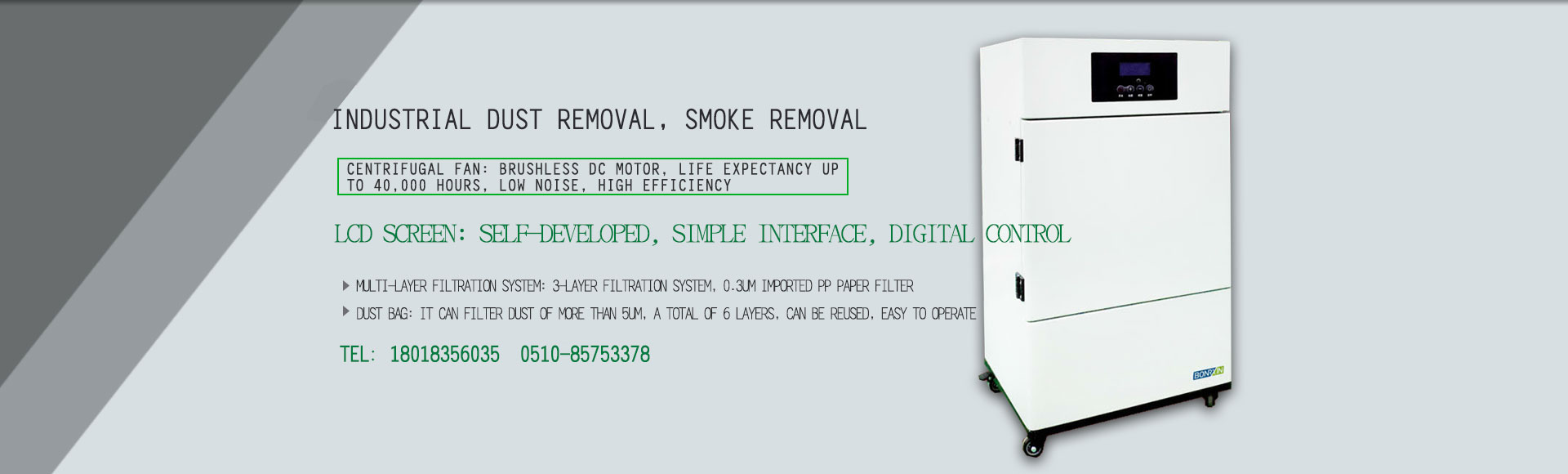
1. Centrifugal Fan
The brushless DC centrifugal fan features a long service life of up to 40,000 hours and is maintenance-free. It delivers low noise, high rotational speed, high air pressure, and excellent performance.
2. LCD Control Panel
The LCD screen is independently developed with a programmable microcontroller for digital control. The user interface is intuitive, with clear display of operating parameters. The system automatically detects fan performance and alerts users of pipe blockages or filter saturation. Low-pressure control enhances overall operational safety.
3. Dust Bag
A high-capacity dust bag filters particles larger than 5 microns. Composed of six layers, it can hold a large volume of particulate matter. Once filled, it can be removed, cleaned, and reused. This design ensures convenience and reduces maintenance effort.
4. Multi-Layer Filtration System
The unit incorporates a three-stage filtration system: a 5-micron dust bag for coarse particles, a 0.3-micron imported polypropylene filter for fine dust, and an activated carbon filter for gas-phase pollutants. Each stage progressively removes contaminants based on particle size. In the final stage, the activated carbon layer adsorbs residual toxic gases, ensuring that the air discharged is clean and free of particles larger than 0.3 microns.