Back to home | bookmark our website |
Hello, welcome to Wuxi Bonrxin Environmental Technology Co., Ltd.!



Under the suction force generated by the fan, welding fume and exhaust gases are drawn into the equipment through a universal extraction hood. A spark arrestor is installed at the air inlet to prevent sparks from entering the system. The smoke-laden air enters a settling chamber, where gravity and upward airflow work together to cause larger particles to fall directly into the dust hopper. Fine particulate matter is captured on the outer surface of the filter cartridge. After being purified by the filter cartridge, the clean air flows into a clean chamber, then passes through an activated carbon filter for further purification before being discharged through the outlet in compliance with emission standards.
This system is suitable for welding applications that generate fumes, such as arc welding, CO₂ shielded welding, MAG welding, carbon arc gouging, gas flame cutting, and other related processes.
The development of fume purification technology is currently focused on enhancing product functionality and increasing technical sophistication, with the goal of minimizing daily maintenance requirements while ensuring stable operation. Improvements in fume control can be approached from three key aspects:
Lack of engineering expertise in some fume purifier manufacturers affects practical application. Without adequate knowledge of system design—including proper duct layout, equipment selection, fan (or pump) matching, vibration damping, and noise reduction—manufacturers are unable to provide end-to-end fume purification solutions. This impacts equipment performance and purification results. Common issues include mismatched fan-to-equipment configurations: using oversized fans with small systems (leading to high airflow velocity and reduced retention time, lowering purification efficiency) or undersized fans with large systems (causing poor exhaust flow).
Fume purification should be regarded as an engineering challenge, not just a product-level issue. To improve real-world outcomes, the industry must raise its engineering standards and integrate systems thinking into product deployment.
Although most fume purification technologies on the market meet environmental regulations, the industry faces challenges such as excessive competition, small-scale production, low technical barriers, and unfair market practices. Moving forward, it is critical to raise emission standards and technical certification requirements. By improving performance benchmarks—such as purification efficiency, airflow resistance, and VOC control—regulatory bodies can help guide the market, encourage innovation, and phase out substandard products.
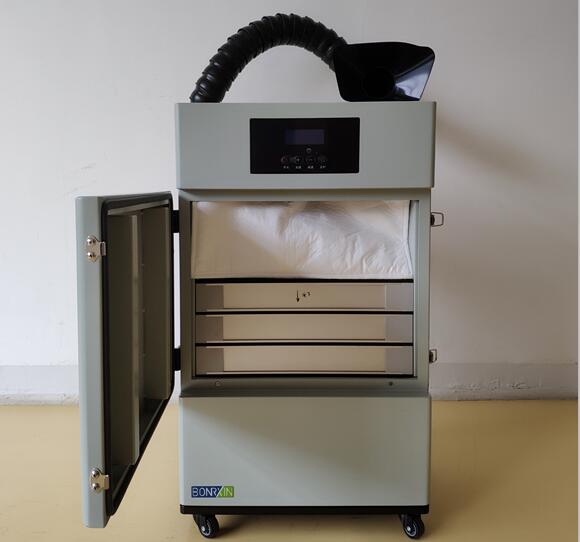 BCB-M600 Fume Purifier
 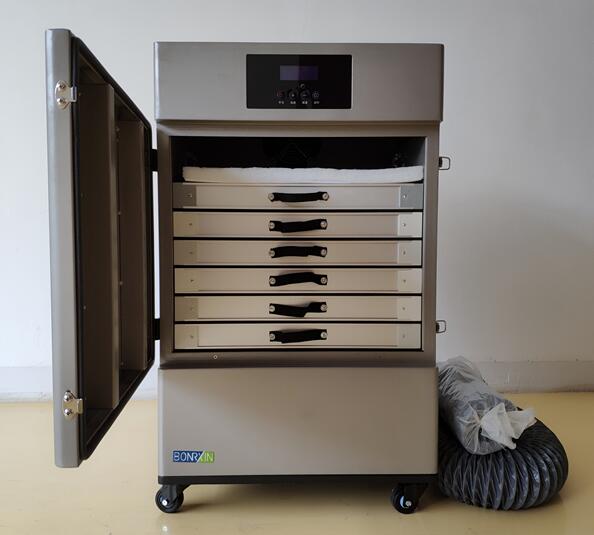 BCB-M1000 Fume Purifier
 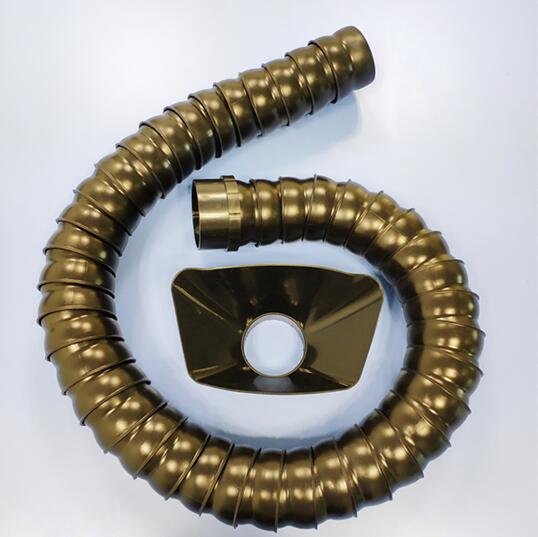 Flexible Bellows Pipe
 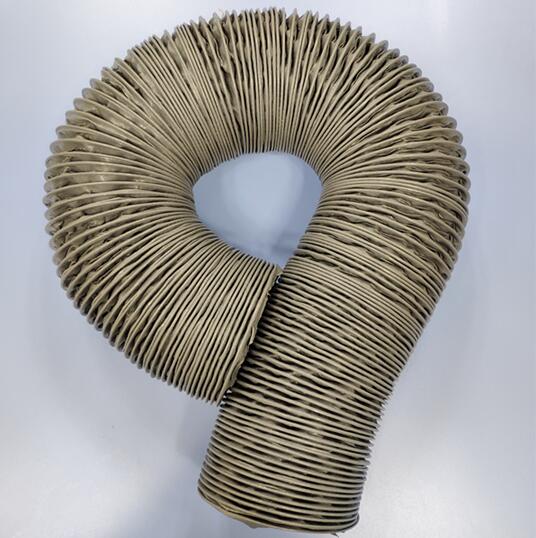 Soft Hose
 Enterprise substation: Guangdong | Shanghai | Beijing | Jiangsu | Hubei |
Disclaimer: Some content on this website is sourced from the internet. If any material inadvertently infringes on third-party intellectual property rights, please contact us by phone or in writing. We will respond promptly and take appropriate action.